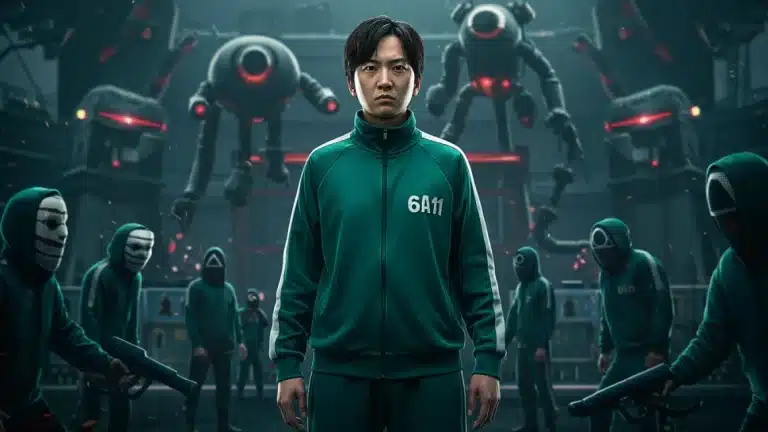
The global phenomenon that is Squid Game captivated audiences worldwide with its brutal depiction of a deadly game where desperate individuals compete for a life-changing cash prize. Beyond the visceral thrills and shocking twists, the series offered a scathing critique of capitalism, economic inequality, and the lengths to which people will go to survive. As anticipation for Squid Game Season 2 builds towards its projected 2026 release, fans and critics alike are eager to see how the narrative will evolve, especially regarding its psychological depth and social commentary. This upcoming season promises to delve even deeper into the human psyche, introducing new character arcs that will undoubtedly reflect and amplify the series’ core themes. We’re going to take an insider’s look at what we can expect from four potential new character archetypes and how their journeys might further illuminate the dark corners of society.
The Enduring Appeal of Squid Game and What to Expect from Squid Game Season 2
When Squid Game first premiered, it wasn’t just a hit; it was a cultural earthquake. Its unique premise, coupled with stellar performances and a relentless pace, resonated with millions. The show’s ability to blend high-stakes survival games with profound social commentary struck a chord, prompting discussions about poverty, debt, class struggle, and the moral compromises individuals make under extreme pressure. The cliffhanger ending of Season 1 left audiences clamoring for more, with many questions remaining about the true nature of the games, the motivations of the Front Man, and the ultimate fate of Seong Gi-hun.
Squid Game Season 2 is not just a continuation of a story; it’s an opportunity to expand on an already rich thematic landscape. The creators have a chance to explore new facets of human nature, new forms of societal pressure, and perhaps even the global implications of such a deadly enterprise. Fan theories abound, ranging from Gi-hun infiltrating the game from within to a larger, more organized resistance forming against the shadowy organization behind the games. Regardless of the specific plot points, the expectation is that the new season will maintain, if not elevate, the psychological intensity and sharp social critique that defined its predecessor.
The success of the first season lay in its ability to make viewers question their own morals and the societal structures that push people to such desperate measures. It forced us to confront uncomfortable truths about wealth disparity and the commodification of human life. With Squid Game Season 2, the stakes are even higher. The world knows about the games now, or at least Gi-hun does. This knowledge changes the dynamic entirely, opening up possibilities for both internal conflicts within the game structure and external challenges to its existence.
One of the most exciting aspects of any returning series is the introduction of new characters. These fresh faces bring new perspectives, new backstories, and new conflicts to the forefront. For Squid Game Season 2, these new character arcs are crucial for deepening the psychological exploration and broadening the scope of its social commentary. While specific details remain under wraps, we can speculate on archetypes that would naturally fit within the established universe and enhance its themes.
1. The Idealistic Activist: Challenging the System from Within
Imagine a new participant who isn’t driven solely by debt or desperation, but by a burning desire to expose and dismantle the Squid Game organization. This character, let’s call her ‘Min-ji,’ could be an idealistic activist, perhaps a former journalist or a social justice advocate, who deliberately enters the game to gather evidence and reveal its horrors to the world. Her motivation wouldn’t be the prize money, but justice.
Psychological Depth: Min-ji’s arc would explore the immense psychological toll of maintaining one’s moral compass in an environment designed to strip away all humanity. How does one advocate for justice when survival demands complicity? Her struggle would highlight the internal conflict between personal safety and ethical imperative. She might face moments where she has to make morally compromising decisions to stay alive and continue her mission, questioning if the ends truly justify the means.
Social Commentary: This character would directly address the theme of systemic corruption and the power of individual resistance. Her presence would ask whether true change can come from within such a brutal system or if it requires an external force. It would also comment on the dangers and sacrifices involved in whistleblowing and fighting against powerful, entrenched forces. Min-ji could represent the often-futile yet essential struggle of individuals against overwhelming societal injustices, embodying the spirit of those who refuse to be silenced.
2. The Disillusioned Elite: A Glimpse into the Game Masters’ World
What if not all the architects or facilitators of the Squid Game are purely evil? A new character could be a disillusioned member of the elite, perhaps a lower-tier VIP or a former game designer, who has grown weary of the cruelty and moral bankruptcy of the operation. Let’s call him ‘Mr. Lee.’ He might have initially been drawn in by power or wealth but now harbors deep regrets.
Psychological Depth: Mr. Lee’s arc would offer a rare peek behind the curtain, exploring the psychological burden of complicity. He would wrestle with guilt, fear of retribution from the organization, and the slow erosion of his own humanity. His journey could be one of redemption, or perhaps a descent into deeper despair as he realizes the inescapable nature of his involvement. This character could show that even those seemingly in control are victims of a larger, more insidious system, albeit in a different way than the players. He might struggle with the cognitive dissonance of knowing the truth but being unable to act, leading to severe internal conflict and potentially a dramatic breaking point.
Social Commentary: This character would serve as a powerful commentary on the corrupting influence of power and wealth, and the moral compromises made by those who benefit from exploitative systems. It could explore the idea that even those at the top can become trapped by their own creations. Mr. Lee’s disillusionment would highlight the emptiness of material gain when it comes at the cost of human suffering, challenging the notion that wealth brings happiness or freedom. Moreover, his arc could shed light on the hierarchical nature of even illicit organizations, demonstrating that power is rarely absolute and often comes with its own set of chains.
3. The Seasoned Survivor: A Veteran of Other Deadly Games
Given the global reach suggested by the VIPs, it’s plausible that the Squid Game isn’t the only deadly game of its kind. A new character, ‘Sae-byeok’s older brother’ (hypothetically, to tie into existing lore, or a completely new character, ‘Kang-joon’), could be a veteran of similar, perhaps even more brutal, survival games from other parts of the world. He enters the Squid Game with a unique set of skills, a hardened demeanor, and an uncanny ability to read people and situations.
Psychological Depth: Kang-joon’s arc would explore the long-term psychological effects of repeated trauma and the desensitization that comes from being constantly exposed to death. He might be emotionally numb, hyper-vigilant, and distrustful of everyone. His internal struggle would be about whether he can regain any shred of his former humanity or if he is irrevocably broken. His interactions with other players could highlight the contrast between those new to the horrors and those who have long since lost their innocence. This character would embody the ultimate survivor, but at what cost? His journey could be one of seeking an elusive peace or finding a new purpose beyond mere survival, perhaps through protecting others.
Social Commentary: This character would amplify the commentary on the global nature of exploitation and the commodification of human life. It would suggest that such games are not isolated incidents but part of a wider, organized network preying on the world’s most vulnerable. Kang-joon would represent the ultimate consequence of a world where human lives are disposable, highlighting the insidious way violence and desperation can become normalized. His existence would underscore the idea that the Squid Game is not an anomaly but a symptom of a much larger, global disease of inequality and human suffering.
4. The Unwilling Participant: Forced into the Game
While most participants in Season 1 joined voluntarily, albeit out of extreme desperation, Squid Game Season 2 could introduce a character who is forcibly entered into the game. Perhaps their family is held hostage, or they are blackmailed into participating. Let’s call her ‘Eun-woo,’ a talented individual whose skills are deemed valuable by the organizers, and who is coerced into playing.
Psychological Depth: Eun-woo’s arc would explore the unique psychological torment of having no agency in a life-or-death situation. Her struggle would be between self-preservation and the desire to protect her loved ones, even if it means betraying others or compromising her own values. This character could experience intense feelings of resentment, helplessness, and a profound loss of control, pushing her to the brink of despair. Her story would highlight the psychological impact of being stripped of choice and the moral quandaries that arise when one’s actions are dictated by external threats. She might also explore the concept of subtle resistance, finding small ways to defy her captors while still appearing to comply.
Social Commentary: This character would provide a stark commentary on modern slavery, coercion, and the ways in which powerful entities exploit individuals beyond mere financial debt. It would broaden the scope of the show’s critique to include not just economic inequality but also the various forms of systemic oppression that strip people of their freedom and dignity. Eun-woo’s plight would underscore how vulnerability can be exploited in multifaceted ways, demonstrating that the games are not just about money, but about absolute control and the dehumanization of those deemed disposable. Her narrative could also touch upon themes of surveillance and manipulation, showing how technology and information can be weaponized against individuals.
The Broader Implications: Squid Game Season 2 and Global Inequality
The first season of Squid Game was a brilliant allegory for the cutthroat nature of modern capitalism and the growing chasm between the rich and the poor. With Squid Game Season 2, the creators have an opportunity to expand this commentary, perhaps even exploring the global dimensions of economic disparity and the interconnectedness of various forms of oppression.
The introduction of diverse new character arcs, each representing a different facet of societal struggle, would allow the show to touch upon a wider range of issues. Min-ji could highlight the challenges faced by activists and whistleblowers in a world where powerful entities operate with impunity. Mr. Lee could delve into the moral decay within the elite class and the psychological cost of complicity. Kang-joon could underscore the global trauma of poverty and violence, suggesting that the Squid Game is merely one manifestation of a worldwide phenomenon. And Eun-woo could shed light on the insidious nature of coercion and modern-day slavery, where individuals are stripped of their autonomy for the benefit of others.
Furthermore, Squid Game Season 2 could explore the international ramifications of the game. Are there other games in other countries? How do these games interact? Is there a global network of VIPs who fund and oversee these deadly spectacles? Answering these questions would elevate the show from a national critique to a global one, making its social commentary even more potent and relevant in an increasingly interconnected world.
The series has already established a foundation for exploring these complex themes. The very existence of VIPs from different nations, speaking various languages, suggests a global reach for the games. This opens the door for Squid Game Season 2 to explore how different cultures and economic systems contribute to the creation of desperate individuals and how the games adapt to these contexts. The show could become a commentary on globalization itself, and how it can exacerbate existing inequalities.
The Psychological Impact of Witnessing and Participating
Beyond the individual character arcs, Squid Game Season 2 will undoubtedly continue to explore the broader psychological impact of participating in and witnessing such extreme violence. How do players cope with the guilt of surviving when others perish? What does it mean to win a game that demands such moral compromises? Gi-hun’s arc in Season 1 already touched upon this, showing his profound post-traumatic stress and his struggle to reconcile with his actions and observations.
New characters will bring new forms of psychological trauma. Min-ji, the activist, might face moral injury from the compromises she has to make. Mr. Lee, the disillusioned elite, could grapple with existential dread and self-loathing. Kang-joon, the seasoned survivor, might be battling chronic emotional numbness and the ghosts of his past. Eun-woo, the unwilling participant, could suffer from severe anxiety, paranoia, and a deep sense of betrayal.
The show’s strength lies in its unflinching portrayal of these psychological scars. It doesn’t shy away from the ugliness of human nature under duress, nor does it offer easy answers. Squid Game Season 2 is expected to deepen this exploration, showing the long-term consequences of participating in such a dehumanizing system, not just for the players but also for those who facilitate and observe the games. The psychological stakes are just as high, if not higher, than the physical ones.
The Role of Gi-hun in Squid Game Season 2
While this article focuses on potential new character arcs, it’s impossible to discuss Squid Game Season 2 without considering the central role of Gi-hun. Having survived the first game, his perspective has fundamentally shifted. He is no longer just a desperate participant; he is a witness, a survivor, and potentially, a revolutionary.
His interactions with new characters could be pivotal. He might find allies in Min-ji, the activist, or even confront Mr. Lee, the disillusioned elite. His own psychological journey will continue, perhaps evolving from survivor’s guilt to a burning desire for justice. Gi-hun’s role could be to bridge the gap between the internal world of the games and the external fight against them, acting as a catalyst for change.
His character could also represent the enduring hope, however faint, that humanity can prevail against overwhelming odds. His decision to turn back at the end of Season 1 signifies a refusal to ignore the injustice he witnessed. This sets the stage for a compelling narrative where his psychological fortitude and moral resolve are tested in new and profound ways. He could serve as a mentor to new players, or a thorn in the side of the organization, constantly undermining their operations from the outside.
Conclusion: Anticipating the Psychological and Social Impact of Squid Game Season 2
Squid Game Season 2 is poised to be more than just a thrilling follow-up; it has the potential to be a profound examination of the human condition in the face of extreme societal pressures. By introducing new character arcs like the Idealistic Activist, the Disillusioned Elite, the Seasoned Survivor, and the Unwilling Participant, the series can expand its psychological depth and broaden its social commentary.
These new perspectives will allow the show to explore different facets of inequality, exploitation, and the moral compromises individuals are forced to make. The focus on psychological realism, coupled with its sharp critique of systemic issues, will ensure that Squid Game Season 2 resonates deeply with audiences, sparking further discussions about the world we live in and the values we hold dear. As we await its 2026 release, the anticipation isn’t just for another game, but for another powerful, thought-provoking journey into the darkest corners of humanity and society.
The creators have a unique opportunity to build upon the groundbreaking success of the first season, cementing Squid Game‘s legacy as a series that not only entertains but also challenges and incites critical thought. The careful crafting of these new character arcs will be instrumental in achieving this, offering fresh lenses through which to view the pervasive issues of our time. The psychological depth of Squid Game Season 2 promises to be as unsettling as it is enlightening, pushing the boundaries of what a thriller can achieve in terms of social commentary.