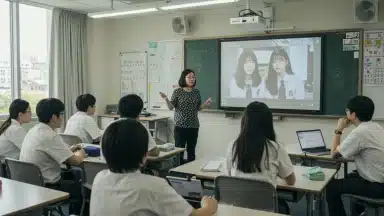
Beyond the Screen: Understanding the 3 Key Societal Shifts in U.S. Youth Culture Driven by K-Drama Trends
The global phenomenon of K-Drama has transcended mere entertainment, evolving into a potent cultural force that is profoundly reshaping youth culture in the United States. What began as a niche interest has blossomed into a mainstream sensation, influencing everything from fashion and beauty standards to social interactions and even career aspirations among young Americans. This isn’t just about watching captivating storylines; it’s about a deep immersion into a culture that, while geographically distant, resonates powerfully with the sensibilities and desires of a new generation. The allure of K-Dramas lies not only in their compelling narratives and high production values but also in their ability to present alternative perspectives on love, family, success, and personal identity. As we delve deeper into the impact of K-Drama on youth culture, we uncover three significant societal shifts that are transforming the landscape of American youth.
The rise of K-Drama is inextricably linked to the broader Hallyu Wave, or Korean Wave, which has seen South Korean popular culture gain immense traction worldwide. From K-Pop music groups like BTS and Blackpink to Korean cinema like ‘Parasite’ and ‘Minari’, and certainly K-Dramas, this cultural export has captivated global audiences. For U.S. youth, K-Dramas offer a refreshing alternative to Western media, often presenting narratives that are less cynical, more emotionally nuanced, and deeply rooted in themes of perseverance, community, and respect. This exposure is not superficial; it’s leading to tangible changes in how young people perceive themselves, interact with others, and engage with the world at large. Understanding these shifts is crucial for anyone keen on grasping the evolving dynamics of contemporary youth culture.
Shift 1: Redefining Aesthetics and Fashion Through K-Drama Youth Culture
One of the most visible and immediate impacts of K-Drama on U.S. youth is the profound redefinition of aesthetic preferences and fashion trends. The impeccably styled characters, with their flawless skin, meticulously chosen outfits, and distinct hairstyles, have become aspirational figures. This goes far beyond simply admiring an actor; it translates into tangible changes in consumer behavior and self-expression among young Americans. The influence on K-Drama youth culture is undeniable and pervasive.
The Rise of K-Beauty Standards
K-Beauty, characterized by its emphasis on healthy, glowing skin, multi-step routines, and innovative products, has become a global phenomenon, largely propelled by the visibility of K-Drama stars. Young Americans are increasingly adopting these routines, seeking out products like essences, sheet masks, and sunscreens that were once unfamiliar. The goal is not just to imitate, but to achieve the ‘glass skin’ or ‘honey skin’ complexion that is so prevalent in Korean dramas. This shift signifies a move towards a more holistic approach to skincare, prioritizing hydration and protection over heavy makeup. Social media platforms are flooded with tutorials and reviews of K-Beauty products, demonstrating the widespread adoption and enthusiasm within the K-Drama youth culture.
Fashion Forward: From Screen to Street
K-Drama fashion is a masterclass in effortlessly chic yet often sophisticated styling. Characters frequently sport a blend of high-end designer pieces and accessible streetwear, creating looks that are both aspirational and achievable. This has led to a noticeable shift in the wardrobes of U.S. youth. Trends like oversized blazers, pastel color palettes, matching sets, and minimalist accessories, once primarily associated with Korean fashion, are now staples in American youth fashion. Online retailers and social media influencers are quick to identify and promote ‘K-Drama inspired outfits,’ making it easier for young people to emulate their favorite characters. This influence extends beyond clothing to hairstyles and even subtle mannerisms, showcasing the deep penetration of K-Drama youth culture into personal aesthetics.
Challenging Traditional Gender Norms in Appearance
Perhaps one of the most significant aesthetic shifts driven by K-Drama is the subtle but powerful challenge to traditional Western gender norms, particularly concerning male appearance. K-Drama leading men often embrace a more ‘soft masculinity,’ characterized by flawless skin, styled hair, and a keen attention to fashion, without compromising their appeal. This contrasts with some traditional Western ideals of rugged masculinity. For U.S. male youth, this exposure offers a broader spectrum of acceptable male beauty, encouraging greater self-care and expression through fashion and grooming. It opens up conversations about what it means to be masculine and allows for more diverse forms of self-presentation, significantly impacting K-Drama youth culture.
This aesthetic revolution is not just about superficial changes; it reflects a deeper cultural exchange where young Americans are embracing new ideals of beauty and self-expression, largely thanks to the pervasive and attractive portrayal of these standards in K-Dramas.
Shift 2: Evolving Social Norms and Relationship Dynamics
Beyond aesthetics, K-Dramas are subtly but surely influencing the social norms and relationship dynamics among U.S. youth. The narratives often present different approaches to courtship, family relationships, and friendships, providing alternative models that resonate with a generation seeking authenticity and deeper connections. The impact on K-Drama youth culture is evident in changing personal interactions.
Redefining Romance and Courtship
K-Dramas often portray romance with a distinct blend of sweetness, emotional depth, and a slower, more chaste progression compared to typical Western narratives. The emphasis is frequently on building emotional connection, mutual respect, and subtle gestures of affection rather than overt physicality. This portrayal has resonated with U.S. youth, leading to a re-evaluation of what constitutes an ideal romantic relationship. There’s a growing appreciation for ‘slow burn’ romances, chivalrous acts, and clear communication, moving away from some of the more fast-paced or transactional aspects of modern dating. This shift is particularly noticeable in online discussions and personal anecdotes where young people express a desire for ‘K-Drama level’ romance, indicating a significant influence on K-Drama youth culture’s perception of love.

Emphasis on Respect and Filial Piety
Family dynamics in K-Dramas are often characterized by a strong emphasis on filial piety, respect for elders, and the importance of family harmony. While U.S. youth culture traditionally values independence, the exposure to these narratives introduces a different perspective on intergenerational relationships. Young Americans, particularly those from immigrant backgrounds or those seeking stronger community ties, are finding resonance in these themes. It encourages a greater appreciation for family bonds, a willingness to consider parental perspectives, and a deeper understanding of cultural expectations regarding respect. This doesn’t necessarily mean a complete adoption of Korean family structures, but rather an integration of certain values into existing family dynamics, enriching K-Drama youth culture.
Friendship Goals: Loyalty and Support
The portrayal of friendships in K-Dramas is another area of significant influence. These dramas often depict deep, loyal, and supportive friendships, where characters go to great lengths for one another. This ideal of unwavering companionship and mutual support resonates strongly with U.S. youth, who often navigate complex social landscapes. It reinforces the value of genuine connections, active listening, and being a reliable presence in a friend’s life. The ‘squad goals’ aesthetic often seen in K-Dramas, where groups of friends share experiences and overcome challenges together, fosters a desire for similar close-knit communities, impacting K-Drama youth culture’s social aspirations.
These evolving social norms suggest a generation that is open to integrating new relational blueprints, seeking deeper emotional engagement and valuing respect and loyalty in their personal connections, all informed by the compelling narratives of K-Dramas.
Shift 3: Broadening Global Perspectives and Cultural Appreciation
Perhaps the most profound and far-reaching societal shift driven by K-Dramas among U.S. youth is the broadening of global perspectives and a heightened appreciation for diverse cultures. K-Dramas serve as a gateway to understanding a different society, breaking down cultural barriers and fostering a more interconnected worldview. This expansion of understanding is a cornerstone of K-Drama youth culture.
Gateway to Korean Language and Culture
For many U.S. youth, K-Dramas are their first significant exposure to Korean language and culture. The frequent use of Korean phrases, traditional customs, food, and societal nuances within the dramas sparks curiosity and encourages further exploration. This has led to a surge in interest in learning the Korean language, with online resources and language classes seeing increased enrollment. Beyond language, young people are exploring Korean cuisine, history, and travel, eager to experience the culture firsthand. This active engagement goes beyond passive consumption, fostering a genuine desire for cultural immersion and significantly impacting K-Drama youth culture.
Challenging Western-Centric Views
By offering narratives rooted in a non-Western context, K-Dramas naturally challenge the often Western-centric worldview prevalent in much of mainstream U.S. media. They present different societal values, problem-solving approaches, and definitions of success and happiness. This exposure encourages critical thinking about cultural relativism and helps young people understand that there are multiple valid ways of life and perspectives. It fosters a more nuanced understanding of global dynamics and reduces ethnocentric biases, which is a powerful aspect of K-Drama youth culture.
Fostering Empathy and Intercultural Understanding
Through compelling storytelling, K-Dramas allow viewers to step into the shoes of characters from a different cultural background, experiencing their joys, struggles, and triumphs. This narrative empathy is a powerful tool for fostering intercultural understanding. When young people connect emotionally with characters facing universal human experiences through a Korean lens, it cultivates a sense of shared humanity and breaks down perceived differences. This increased empathy extends beyond Korea, opening minds to appreciating other global cultures and diverse perspectives, a crucial development within K-Drama youth culture.

The impact of K-Dramas on broadening global perspectives is not just about learning facts; it’s about cultivating a more open, understanding, and interconnected generation of U.S. youth, ready to engage with the complexities of a diverse world.
The Broader Implications of K-Drama’s Influence on K-Drama Youth Culture
The societal shifts driven by K-Dramas are not isolated phenomena; they have broader implications for U.S. society and the future of cultural exchange. The increasing influence of K-Drama on youth culture signals a more diverse and globally aware generation.
Economic Impact and Soft Power
The popularity of K-Dramas contributes significantly to South Korea’s soft power, enhancing its global image and driving economic benefits. The increased interest in K-Beauty, K-Fashion, Korean food, and tourism translates into tangible economic opportunities. For U.S. businesses, understanding these trends in K-Drama youth culture is crucial for marketing and product development, as they cater to a demographic increasingly influenced by global media.
Future of Media Consumption
The enthusiastic adoption of K-Dramas by U.S. youth also points to a significant shift in media consumption habits. Young people are increasingly comfortable consuming content with subtitles, valuing compelling storytelling and diverse narratives over language barriers. This trend suggests a future where media landscapes are more globalized, with audiences actively seeking out international content that resonates with them, further integrating K-Drama youth culture into the global media tapestry.
A More Inclusive and Empathetic Generation
Ultimately, the shifts in aesthetics, social norms, and global perspectives fostered by K-Dramas are contributing to the development of a U.S. youth population that is potentially more inclusive, empathetic, and culturally aware. By engaging with different ways of life and understanding diverse human experiences, this generation is better equipped to navigate an increasingly interconnected world, embodying the evolving K-Drama youth culture.
Conclusion: K-Drama’s Enduring Legacy on K-Drama Youth Culture
The influence of K-Dramas on U.S. youth culture is undeniable and multifaceted. From reshaping beauty standards and fashion choices to subtly altering perceptions of romance and family, and significantly broadening global perspectives, K-Dramas are leaving an indelible mark. These aren’t fleeting fads but rather deep-seated shifts that reflect a generation’s openness to new cultural influences and a desire for diverse narratives.
As the Hallyu Wave continues to crest, the role of K-Dramas in shaping the identity and worldview of young Americans will only grow. Understanding these three key societal shifts – the redefinition of aesthetics, the evolution of social norms, and the broadening of global perspectives – is essential for educators, marketers, parents, and anyone interested in the dynamic and ever-evolving landscape of youth culture in the United States. The screen may be where these stories begin, but their impact reverberates far beyond, creating a more interconnected and culturally rich K-Drama youth culture for the future.