U.S. Universities Embrace K-Drama: New Asian Studies Programs by 2026
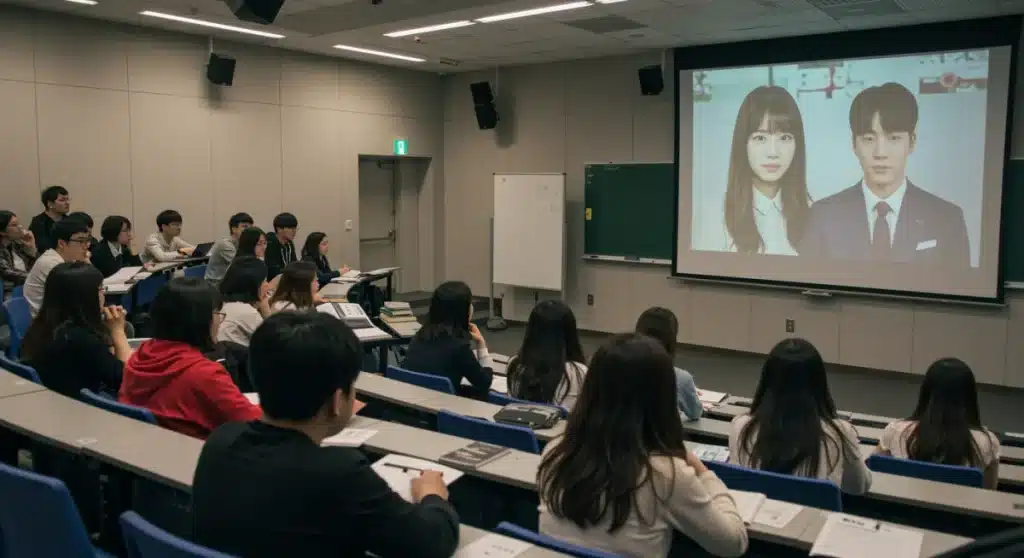
Five U.S. universities are set to launch new Asian Studies programs by 2026, uniquely incorporating K-Drama to explore its profound cultural, linguistic, and societal influences.
The global phenomenon of Korean dramas, affectionately known as K-Drama, has transcended entertainment, evolving into a significant cultural force. This growing influence is now making its way into academia, with several U.S. universities recognizing its pedagogical potential. We’re delving into how these institutions are preparing to incorporate K-Drama university programs into their curricula, specifically within new Asian Studies programs slated for launch by 2026. This shift marks a pivotal moment in higher education, acknowledging K-Drama not just as popular culture, but as a rich subject for interdisciplinary study.
The rising tide of K-Drama’s academic recognition
K-Drama’s journey from niche entertainment to a global cultural juggernaut is undeniable. Its intricate narratives, compelling characters, and high production values have captivated audiences worldwide, leading to an increased interest in Korean language, history, and society. This surge in popularity has not gone unnoticed by academic institutions, particularly within the United States.
Universities are beginning to see K-Drama as more than just a fleeting trend. They recognize its potential as a powerful lens through which to explore complex socio-political themes, historical contexts, and linguistic nuances. The storytelling often reflects contemporary Korean society, its challenges, and aspirations, making it an invaluable tool for cultural analysis.
From fan obsession to scholarly pursuit
- Cultural diplomacy: K-Drama acts as a soft power, fostering understanding and appreciation for Korean culture globally.
- Language acquisition: Many viewers are inspired to learn Korean, boosting enrollment in language courses.
- Societal reflection: Dramas often tackle sensitive topics like class disparity, gender roles, and mental health, sparking academic discourse.
- Economic impact: The industry’s growth has significant implications for media studies and international business.
The academic community is now grappling with how to best integrate this dynamic medium into structured learning environments. The goal is to move beyond superficial appreciation and delve into the deeper layers of meaning and impact that K-Drama offers, providing students with a comprehensive understanding of East Asian cultures through a contemporary and engaging medium.
Curriculum development: Crafting K-Drama into Asian Studies
The process of integrating K-Drama into established Asian Studies programs is complex, requiring careful consideration of curriculum design and pedagogical approaches. Universities are not simply adding K-Drama viewing sessions; they are developing rigorous academic frameworks that allow for critical analysis and scholarly engagement.
This involves creating new courses or adapting existing ones to include K-Drama as primary texts. Faculty members are collaborating across departments, from literature and film studies to sociology and political science, to ensure a multidisciplinary approach. The aim is to provide students with a holistic understanding of K-Drama’s role in shaping and reflecting Korean society and its global impact.
Interdisciplinary approaches to K-Drama study
- Literary analysis: Examining narrative structures, character archetypes, and thematic development.
- Film theory: Analyzing cinematography, editing, sound design, and directorial choices.
- Sociological perspectives: Investigating representations of family, work, education, and social hierarchies.
- Historical context: Understanding how historical events and political landscapes influence storylines.
These new programs also emphasize research opportunities, encouraging students to conduct their own studies on various aspects of K-Drama, from audience reception to its influence on global trends. The curriculum is designed to be flexible, allowing for the inclusion of emerging K-Drama trends and scholarly debates, ensuring its continued relevance.
Five universities pioneering K-Drama integration by 2026
By 2026, at least five prominent U.S. universities are projected to have fully integrated K-Drama components into their Asian Studies programs, leading the charge in this new academic frontier. While specific names are often under wraps during development phases, the trends indicate a strong move by institutions with established East Asian departments and a history of innovation in cultural studies.
These pioneering institutions are likely to be those already offering robust Korean language and culture programs, recognizing the natural synergy between these areas and K-Drama studies. Their commitment reflects a forward-thinking approach to education, adapting to student interests while maintaining academic rigor.
The development of these programs involves significant investment in faculty expertise, library resources, and technology to support the study of K-Drama. This includes acquiring rights for academic use of various dramas, developing specialized databases, and facilitating guest lectures from industry professionals.
Anticipated program features
- Dedicated K-Drama courses: Stand-alone classes focusing on specific genres, historical periods, or thematic analyses.
- Study abroad opportunities: Partnerships with Korean universities and production companies for immersive experiences.
- Research grants: Funding for student and faculty research projects on K-Drama and its impact.
- Public lecture series: Engaging the wider community through talks by experts and creators.
The goal is to create centers of excellence for K-Drama studies, fostering a new generation of scholars and professionals who can critically engage with and contribute to the understanding of this global cultural phenomenon.
The pedagogical value: Beyond entertainment
The decision to incorporate K-Drama into university curricula extends far beyond simply acknowledging its popularity. Educators recognize the profound pedagogical value it offers, serving as a dynamic and accessible entry point into complex academic subjects. K-Drama provides a rich tapestry of cultural, historical, and social contexts that can be explored in depth.
For instance, a K-Drama set during a specific historical period can provide a visual and emotional connection to events that might otherwise seem abstract in textbooks. Similarly, dramas depicting contemporary social issues can spark critical discussions on topics such as economic inequality, gender dynamics, and mental health in Korean society, and by extension, globally.
Key educational benefits
- Enhanced engagement: Students are often more invested in material they find culturally relevant and entertaining.
- Contextual learning: K-Drama offers real-world examples of theoretical concepts in sociology, politics, and economics.
- Critical thinking skills: Analyzing narrative techniques, character motives, and cultural representations sharpens critical analysis.
- Intercultural competence: Exposure to diverse perspectives and norms fosters global understanding and empathy.
Furthermore, K-Drama can serve as a powerful tool for language acquisition, immersing students in authentic conversational Korean and cultural idioms. This multi-faceted approach ensures that students gain not only knowledge but also valuable analytical skills applicable to a wide range of fields.
Challenges and opportunities in K-Drama academia
While the integration of K-Drama into U.S. university programs presents exciting opportunities, it also comes with its share of challenges. One primary concern is ensuring academic rigor and avoiding the perception that K-Drama studies are merely a trivial pursuit. This requires careful curriculum design and the recruitment of highly qualified faculty members.
Another challenge lies in the rapidly evolving nature of the K-Drama industry itself. Keeping curricula updated with the latest trends, popular productions, and scholarly discourse demands continuous effort. Additionally, securing licensing rights for educational use of dramas can be complex and costly, posing a barrier for some institutions.
Navigating the academic landscape
- Resource allocation: Securing funding for faculty, materials, and technological infrastructure.
- Perception management: Elevating K-Drama studies beyond pop culture to a respected academic discipline.
- Interdisciplinary collaboration: Fostering cooperation among diverse departments to create comprehensive programs.
- Global partnerships: Establishing connections with Korean academic and industry institutions.
Despite these hurdles, the opportunities are immense. K-Drama offers a unique gateway to understanding East Asian cultures, languages, and societies in a way that resonates deeply with contemporary students. It can attract a diverse student body, fostering a more inclusive and globally aware academic environment.
The future impact of K-Drama in U.S. higher education
The incorporation of K-Drama into U.S. university programs by 2026 is poised to have a transformative impact on higher education. This move signifies a broader recognition of global cultural phenomena as legitimate and valuable subjects of academic inquiry. It also reflects a responsiveness to student interests and the evolving landscape of international relations.
As these programs mature, they are expected to produce graduates with a nuanced understanding of Korean culture, strong analytical skills, and intercultural competence, making them highly competitive in a globalized job market. These graduates could pursue careers in academia, international relations, media, entertainment, and various other fields requiring cross-cultural expertise.
Long-term implications
- Increased research output: A surge in scholarly articles, books, and conferences dedicated to K-Drama.
- Enhanced cultural exchange: Deeper ties between U.S. and Korean academic institutions and cultural organizations.
- Diversified student body: Attracting students with a passion for global cultures and contemporary media.
- Innovation in pedagogy: Developing new methods for teaching cultural studies through popular media.
Ultimately, the embrace of K-Drama in U.S. higher education is not just about teaching television shows; it’s about fostering a more interconnected, informed, and culturally intelligent global citizenry. It’s an investment in understanding the world through its most compelling and accessible narratives.
| Key Aspect | Brief Description |
|---|---|
| Academic Recognition | K-Drama is gaining scholarly attention as a tool for cultural, linguistic, and societal analysis. |
| Curriculum Development | Universities are crafting interdisciplinary courses, integrating K-Drama into Asian Studies programs. |
| Pioneering Institutions | Five U.S. universities are expected to lead K-Drama integration by 2026, focusing on comprehensive study. |
| Pedagogical Value | K-Drama enhances engagement, offers contextual learning, and develops critical thinking and intercultural competence. |
Frequently asked questions about K-Drama in academia
U.S. universities are recognizing K-Drama’s significant cultural, linguistic, and societal impact. It serves as an engaging medium to explore complex themes in Korean history, politics, and social structures, attracting student interest while offering rich academic content for cultural studies and language acquisition.
These programs will likely feature dedicated K-Drama courses focusing on genres, historical periods, and thematic analyses. They may also include interdisciplinary approaches, combining literary analysis, film theory, and sociological perspectives to provide a comprehensive understanding of K-Drama’s role and influence.
Studying K-Drama can significantly enhance students’ critical thinking, analytical skills, and intercultural competence. It provides contextual learning, allowing students to apply theoretical concepts to real-world examples, thereby preparing them for diverse careers requiring cross-cultural understanding and media literacy.
Key challenges include ensuring academic rigor, securing funding for specialized faculty and resources, and navigating complex licensing rights for K-Drama content. Universities must also continuously update curricula to keep pace with the rapidly evolving K-Drama industry and its scholarly discourse.
The long-term impact includes increased research output, enhanced cultural exchange between the U.S. and Korea, and a more diverse student body. It will also foster innovation in pedagogy, leading to new methods for teaching cultural studies and preparing globally aware citizens.
Conclusion
The integration of K-Drama into U.S. university Asian Studies programs by 2026 signifies a profound evolution in higher education. It underscores the academic world’s recognition of popular culture as a critical lens for understanding global dynamics, cultural nuances, and societal shifts. This forward-thinking approach not only enriches the learning experience for students but also solidifies K-Drama’s position as a powerful medium for cultural diplomacy and scholarly inquiry. As these programs develop, they promise to cultivate a new generation of informed, analytical, and globally conscious individuals ready to engage with the complexities of our interconnected world.