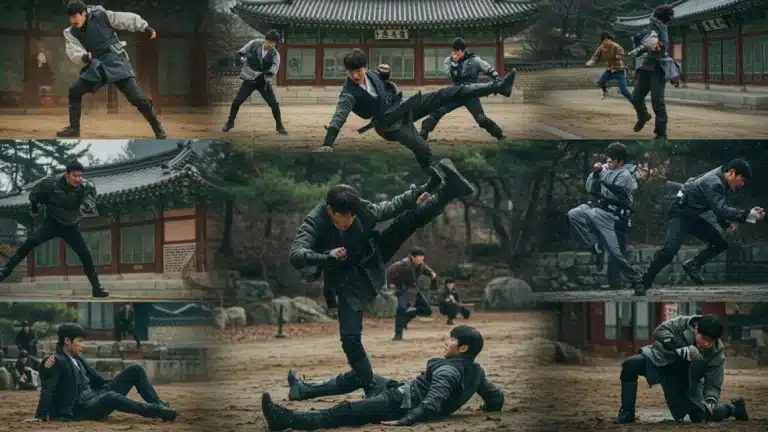
In the ever-evolving landscape of global entertainment, Korean dramas, affectionately known as K-Dramas, have carved out a monumental niche. While their compelling narratives, intricate character development, and stunning cinematography often garner the most attention, there’s another element that has been steadily elevating their status: the breathtaking and innovative K-Drama stunt choreography. Over the past few years, and especially in the last three months, K-Dramas have pushed the boundaries of action sequences, delivering spectacles that rival, and often surpass, their Hollywood counterparts. This isn’t just about flashy moves; it’s about storytelling through motion, precision in execution, and a profound understanding of visual impact. The influence of this groundbreaking work is now palpable, subtly but surely reshaping genre standards in the U.S. entertainment industry.
The rise of streaming platforms has provided a global stage for these productions, allowing audiences worldwide to witness the artistry and athleticism involved. Gone are the days when K-Drama action was considered a niche interest. Today, productions are investing heavily in elaborate fight scenes, complex chase sequences, and gravity-defying stunts, all meticulously planned and executed. This commitment to excellence has not only captivated millions but also sparked conversations among filmmakers and action choreographers globally. The unique blend of traditional martial arts, modern combat techniques, and often a touch of fantasy or hyper-realism creates a distinctive style that is both thrilling and visually arresting. This article delves into the six most innovative K-Drama stunt choreographies from the last three months, examining what makes them stand out and how their impact is beginning to be felt across the Pacific in the United States.
The Evolution of K-Drama Action: A Global Phenomenon
For a long time, Korean cinema was primarily known for its psychological thrillers, poignant melodramas, and horror films. While action elements were present, they often took a backseat to narrative depth. However, a significant shift began in the early 2000s, with films like ‘Oldboy’ and ‘The Man From Nowhere’ showcasing a raw, visceral approach to combat. This cinematic evolution slowly seeped into television, transforming K-Dramas from primarily romantic or historical narratives into powerhouses of diverse genres, including high-octane action. The advent of global streaming services like Netflix, Viki, and Kocowa accelerated this trend, bringing these meticulously crafted action sequences to an international audience hungry for fresh content.
What sets K-Drama stunt choreography apart is its holistic approach. It’s not merely about punches and kicks; it’s about character expression, emotional resonance, and advancement of the plot. Every movement, every impact, every acrobatic flourish serves a purpose, deepening the viewer’s understanding of the characters’ struggles, determination, and resilience. This narrative integration elevates action from mere spectacle to an integral part of the storytelling fabric. Furthermore, Korean stunt teams often employ a blend of traditional Korean martial arts such as Taekwondo and Hapkido, alongside more contemporary influences from Hong Kong action cinema and Hollywood blockbusters, creating a unique hybrid style that is both familiar and refreshingly new. The attention to detail in these sequences, from costume design that allows for maximum mobility to camera work that captures every nuance, is truly remarkable.
The rigorous training undertaken by actors and stunt doubles is another crucial factor. Many K-Drama stars commit to months of intense physical preparation, learning complex fight routines and mastering difficult maneuvers. This dedication ensures that the on-screen action is not only believable but also authentically performed, adding another layer of immersion for the audience. The meticulous planning involved, often starting in pre-production with detailed storyboarding and extensive rehearsals, ensures that the final product is polished and impactful. This commitment to excellence is precisely why K-Drama stunt choreography is gaining such significant traction globally, becoming a benchmark for action sequences in television.
Six Innovative K-Drama Stunt Choreographies of the Last Three Months
1. ‘Vigilante’: Urban Justice Unleashed
‘Vigilante’ burst onto the scene with a gritty, realistic portrayal of a character taking justice into his own hands. The stunt choreography in this series is characterized by its brutal efficiency and grounded fighting style. Unlike some K-Dramas that lean into stylized, almost dance-like combat, ‘Vigilante’ opts for raw, impactful brawls that feel genuinely dangerous. The fight scenes are often set in cramped, unforgiving environments like alleyways, abandoned warehouses, and dimly lit streets, emphasizing the protagonist’s resourcefulness and desperation. The choreographers expertly utilize environmental elements, turning everyday objects into weapons and obstacles into opportunities. The hand-to-hand combat is particularly noteworthy, featuring a blend of close-quarters grappling, quick strikes, and powerful takedowns. Each punch and kick carries significant weight, making the audience wince with every impact. This realistic approach to action sequences has resonated deeply with viewers, showcasing a different facet of K-Drama stunt choreography.
What makes ‘Vigilante’s’ action innovative is its commitment to portraying the physical and emotional toll of violence. The protagonist, Kim Ji-yong (played by Nam Joo-hyuk), is not an invincible superhero; he’s a human driven by a strong sense of justice, and his fights are often messy, desperate struggles for survival. The choreography reflects this vulnerability and determination, making each victory feel hard-earned. The camera work in these scenes is also crucial, often employing handheld shots and rapid cuts to convey the chaotic nature of the fights, drawing the viewer directly into the heart of the action. This immersive experience is a testament to the choreographers’ skill in blending realism with dramatic intensity. The fight against multiple opponents, a common trope in action, is handled with particular finesse, showing strategic movements and tactical thinking rather than just overwhelming force, further cementing its place among innovative K-Drama stunt choreography.
2. ‘A Shop for Killers’: Precision and Tactical Prowess
‘A Shop for Killers’ delivers a masterclass in tactical action, focusing on precision, strategy, and the efficient use of various weapons and combat styles. The series follows a young woman, Jeong Jian (played by Kim Hye-jun), who inherits a mysterious online shopping mall after her uncle’s death, only to find herself embroiled in a deadly world of assassins. The stunt choreography here is a sophisticated blend of firearms expertise, close-quarters combat, and intricate defensive maneuvers. What stands out is the meticulous planning behind each action sequence, often involving complex spatial awareness and coordinated team movements. The fights are less about brute force and more about intelligent engagement, showcasing characters who are highly trained and acutely aware of their surroundings.
The innovation in ‘A Shop for Killers’ lies in its portrayal of diverse combat disciplines. From expertly handled sniper sequences to intense knife fights and dynamic hand-to-hand encounters, the series demonstrates a wide range of skills. The choreographers pay close attention to the authenticity of each fighting style, ensuring that the movements reflect genuine training and expertise. This dedication to realism, coupled with high-stakes scenarios, creates thrilling and believable action. The series also excels in its use of environment, transforming ordinary spaces into battlegrounds where every object can be a tool or a hindrance. The seamless integration of practical effects and subtle CGI enhances the impact without overshadowing the human element of the fights. This show is a prime example of how K-Drama stunt choreography can elevate a thriller into something truly exceptional.
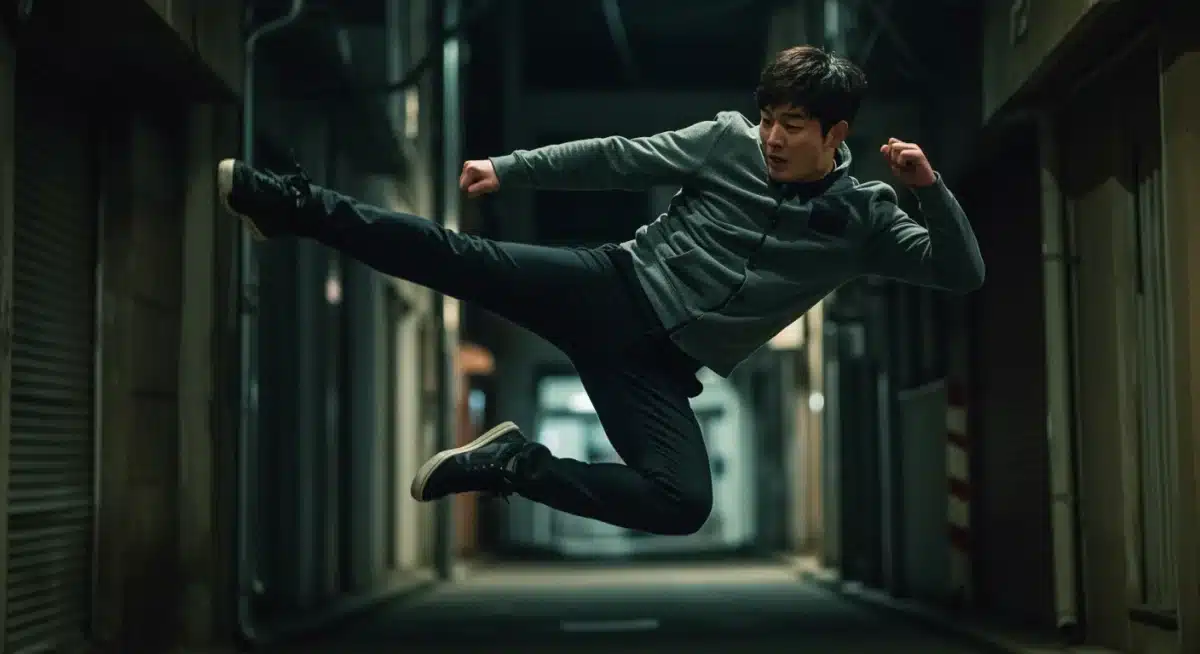
3. ‘Gyeongseong Creature’: Period Action with a Monstrous Twist
‘Gyeongseong Creature’ transports viewers to 1945 Gyeongseong (now Seoul) during the Japanese colonial rule, blending historical drama with creature horror and intense action. The stunt choreography in this series faces the unique challenge of combining period-appropriate combat with fantastical elements. The result is a captivating mix of gritty street brawls, thrilling chase sequences through wartime Gyeongseong, and terrifying encounters with the titular creature. The action sequences are designed to reflect the desperation and chaos of the era, while also incorporating the agility and strength needed to confront a supernatural threat. The use of period weapons and improvised tools adds an authentic layer to the fights, making them feel both historically grounded and dramatically heightened.
The innovation here lies in the seamless integration of human combat with creature effects. The choreographers had to design movements that not only looked convincing against human adversaries but also against a formidable, CGI-enhanced monster. This required a deep understanding of both practical stunt work and visual effects, ensuring that the interactions between characters and creature felt visceral and terrifying. The action is often fast-paced and unpredictable, keeping viewers on the edge of their seats. Whether it’s a desperate scramble for survival in a crumbling building or a tense standoff against an unknown horror, ‘Gyeongseong Creature’ delivers action that is both exhilarating and emotionally charged. It showcases the versatility of K-Drama stunt choreography, proving it can adapt to and enhance any genre, even those with supernatural elements, while maintaining its signature intensity.
4. ‘Death’s Game’: Multiple Lives, Diverse Fights
‘Death’s Game’ offers a truly unique premise where a man who takes his own life is forced to experience death repeatedly through different bodies, each with its own life and destiny. This allows for an incredibly diverse range of stunt choreography, as the protagonist inhabits bodies with varying physical capabilities and combat skills. From a skilled martial artist to a professional fighter, a high school student, or even a prisoner, each life presents a new opportunity for distinct action sequences. This anthology-like approach to action is what makes ‘Death’s Game’ stand out.
The innovation is in the sheer variety and adaptability of the K-Drama stunt choreography. The choreographers brilliantly adapt the fighting style to suit each new body and scenario. One moment, you might witness a highly technical, almost balletic display of martial arts, and the next, a raw, desperate street fight. This constant shift keeps the action fresh and unpredictable, preventing any sense of monotony. It also allows for exploration of different types of physical storytelling, from showcasing peak athleticism to portraying the struggles of someone less capable. The series uses its fantastical premise to its full advantage, delivering action that is not only visually stunning but also deeply tied to the narrative theme of redemption and the value of life. Each fight sequence serves to highlight a different aspect of survival and the human spirit, making ‘Death’s Game’ a standout in recent K-Drama action. This dynamic approach to physical performance is a testament to the creativity and skill of the Korean stunt teams.
5. ‘My Demon’: Supernatural Flair Meets Elegant Combat
‘My Demon’ combines romance, fantasy, and action with a stylish flair. While primarily a romantic comedy, the series features surprisingly well-executed action sequences, particularly involving the demon protagonist, Jeong Gu-won (played by Song Kang). His powers allow for a more fantastical and elegant style of combat, blending supernatural abilities with traditional martial arts. The stunt choreography here is less about raw brutality and more about fluid, almost artistic movements that convey power and grace simultaneously.
The innovation in ‘My Demon’ comes from its ability to integrate supernatural elements seamlessly into its action. Gu-won’s fights often involve telekinetic pushes, enhanced speed, and defensive maneuvers that defy normal human capabilities, all choreographed with a beautiful, almost ethereal quality. The action scenes are often quick, impactful, and visually striking, serving to emphasize the demon’s strength and agility without overshadowing the central romantic plot. Even in a genre not typically known for intense action, ‘My Demon’ proves that K-Drama stunt choreography can be versatile and captivating. The choreographers manage to create exciting and believable action that fits perfectly within the fantasy romance framework, offering a delightful surprise for viewers who might not expect such polished combat sequences. The balance between lighthearted romance and compelling action is a delicate one, and ‘My Demon’ executes it with remarkable precision.
6. ‘The Bequeathed’: Tense Thrills and Visceral Encounters
‘The Bequeathed’ is a dark and atmospheric thriller that relies on suspense and sudden bursts of violence to keep its audience on edge. The stunt choreography in this series is characterized by its visceral nature and surprising intensity. Unlike the more elaborate sequences found in other action-heavy K-Dramas, ‘The Bequeathed’ focuses on short, sharp, and impactful fights that are deeply rooted in the characters’ desperate circumstances. The action is often unexpected, adding to the psychological tension of the narrative.
The innovation lies in the choreography’s ability to maximize impact with minimal embellishment. Fights are often brief but incredibly brutal, reflecting the raw survival instincts of the characters. The choreographers excel at creating a sense of claustrophobia and danger, utilizing tight spaces and sudden attacks to shock the viewer. The action feels very grounded, emphasizing the weight and consequences of each blow. This approach contributes significantly to the overall dark and unsettling tone of the series, making every violent encounter feel significant and irreversible. ‘The Bequeathed’ demonstrates that effective K-Drama stunt choreography doesn’t always require grand scale; sometimes, the most impactful action comes from its raw, unpolished intensity, perfectly serving the psychological thriller genre. The suddenness and realism of the violence enhance the narrative, making it a compelling watch.
The Growing Impact on U.S. Genre Standards
The influence of K-Drama stunt choreography is no longer confined to Asia; it’s steadily making its way into the global consciousness, particularly impacting U.S. genre standards. Hollywood has always been a melting pot of international cinematic techniques, and the precision, innovation, and narrative integration seen in K-Drama action are proving to be irresistible. American filmmakers and stunt coordinators are taking note, drawing inspiration from the dynamic camera work, the seamless blend of martial arts, and the emotional depth embedded within each fight sequence.
One of the most noticeable impacts is the increasing demand for more sophisticated and diverse action sequences in U.S. productions. Audiences, exposed to the high quality of K-Drama action through streaming, now expect more than just generic punches and explosions. They crave meticulously choreographed fights that showcase athleticism, character development, and a clear understanding of spatial dynamics. This has led to a greater emphasis on pre-production planning for action scenes, with more time and resources being allocated to stunt choreography and actor training, mirroring the practices prevalent in South Korea.
Furthermore, the K-Drama approach to action, where fights are not just spectacles but integral parts of the storytelling, is influencing how action is conceived in the U.S. No longer is it enough for a fight scene to simply look cool; it must advance the plot, reveal character traits, or heighten emotional stakes. This narrative-driven action is a hallmark of excellent K-Drama stunt choreography and is now becoming a benchmark for quality in American action cinema and television. The boundary between drama and action is blurring, creating more compelling and cohesive narratives.
The crossover appeal is also evident in the increasing number of collaborations and adaptations. As K-Dramas gain popularity, there’s a greater exchange of talent and ideas. Stunt professionals from both regions are learning from each other, sharing techniques and philosophies. This cross-cultural fertilization is leading to a richer, more diverse action landscape globally. The distinct aesthetic of Korean action, with its emphasis on fluidity, impact, and often a slightly hyper-real edge, is finding its way into Western productions, adding a fresh visual language to familiar genres.
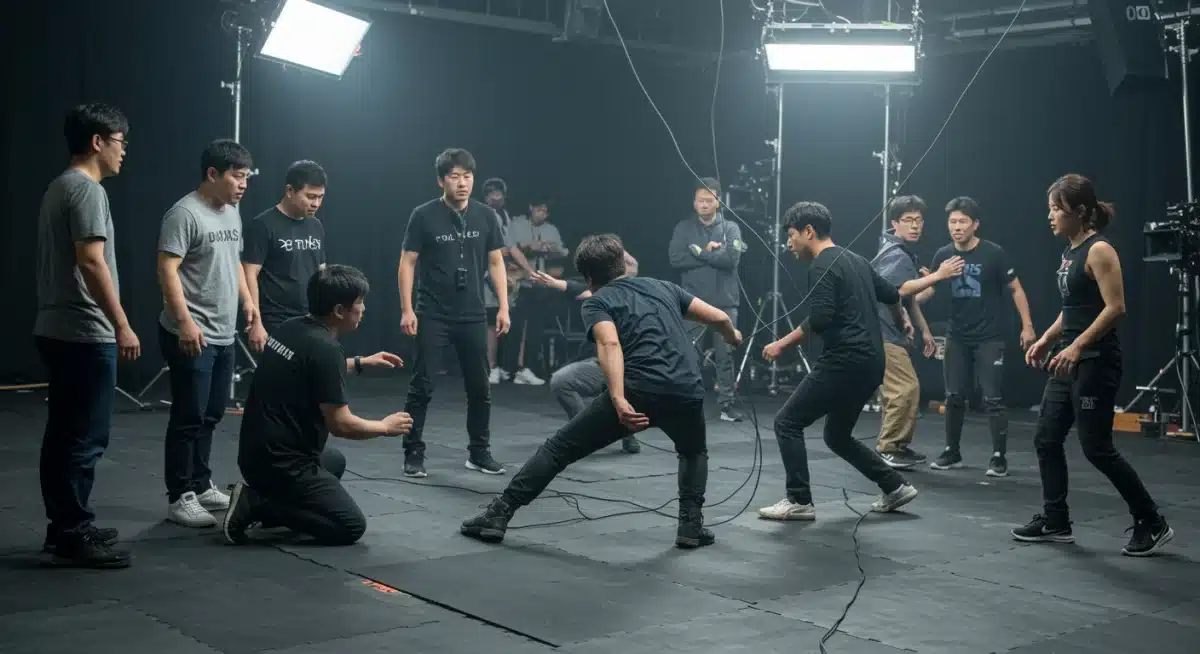
The Art and Science Behind K-Drama Stunts
The creation of compelling K-Drama stunt choreography is a blend of art and science, requiring meticulous planning, rigorous training, and a deep understanding of cinematic language. It begins long before cameras roll, often with a detailed action script that outlines every punch, kick, and evasive maneuver. Stunt coordinators, who are often martial arts experts themselves, then translate these descriptions into tangible movements, collaborating closely with directors and actors to ensure the action aligns with the narrative and character arcs.
Safety is paramount in stunt work. Korean stunt teams are renowned for their professionalism and their commitment to ensuring the well-being of everyone involved. This includes the extensive use of safety wires, crash mats, and specialized equipment, all meticulously hidden or digitally removed in post-production. Actors and stunt doubles undergo intensive training sessions, sometimes for months, to master the complex routines. This training not only builds physical prowess but also fosters a deep understanding of the choreography, allowing for seamless and believable performances. The commitment to rehearsal means that by the time filming begins, the movements are ingrained, enabling actors to focus on their emotional performance even during the most demanding physical scenes.
Technological advancements also play a significant role. High-speed cameras, drone shots, and sophisticated editing techniques allow for the capture and enhancement of every dynamic movement. Slow-motion sequences are often used strategically to highlight particularly impressive feats of athleticism or to emphasize the impact of a crucial blow. The integration of CGI, when used sparingly and effectively, can augment practical stunts, adding an extra layer of spectacle without detracting from the realism. This careful balance between practical effects and digital enhancements is a hallmark of modern K-Drama stunt choreography, creating action that is both grounded and visually stunning.
Moreover, the cultural context often influences the style of action. Traditional Korean martial arts, with their emphasis on powerful kicks and dynamic movements, frequently form the foundation of many K-Drama fight scenes. This heritage is then blended with contemporary fighting styles, creating a unique hybrid that is both culturally distinctive and universally appealing. The storytelling through physical expression is also deeply ingrained; every movement can convey character, emotion, and narrative progression, making the action an inseparable part of the overall dramatic experience. This meticulous approach to every aspect of stunt production is what elevates K-Drama action to an art form.
The Future of Action: K-Drama’s Continuing Influence
As K-Dramas continue to expand their global footprint, their influence on action genre standards is only set to grow. The demand for original, high-quality content is insatiable, and Korean productions are consistently delivering. This sustained output of innovative K-Drama stunt choreography will undoubtedly continue to inspire and challenge filmmakers worldwide, pushing the boundaries of what is possible in screen combat.
We can anticipate even more cross-cultural collaborations, with stunt teams and choreographers from various countries exchanging knowledge and techniques. This globalized approach to action filmmaking will lead to a richer and more diverse array of fight styles and cinematic expressions. The focus on narrative integration, character-driven action, and authentic performances, all hallmarks of K-Drama action, will likely become even more central to how action sequences are conceived and executed across the entertainment industry.
Furthermore, the continuous evolution of technology will offer new tools and possibilities for stunt work. From advanced motion capture techniques to more sophisticated wirework and digital effects, the future of K-Drama action promises even more breathtaking and immersive experiences. The dedication to pushing creative boundaries, combined with a deep respect for safety and artistic integrity, ensures that K-Dramas will remain at the forefront of action innovation for years to come. Their ability to consistently deliver fresh, exciting, and emotionally resonant action sequences makes them a vital force in shaping the future of global entertainment. The bar has been set incredibly high, and audiences everywhere are reaping the benefits of this golden age of K-Drama action.
Conclusion
The last three months have showcased an incredible array of innovative K-Drama stunt choreography, from the raw realism of ‘Vigilante’ to the tactical precision of ‘A Shop for Killers,’ the period grandeur of ‘Gyeongseong Creature,’ the dynamic versatility of ‘Death’s Game,’ the elegant supernatural flair of ‘My Demon,’ and the visceral intensity of ‘The Bequeathed.’ Each series, in its own unique way, has contributed to the ongoing evolution of action storytelling, proving that K-Dramas are not just about compelling narratives but also about groundbreaking physical performances. The meticulous planning, rigorous training, and artistic vision behind these sequences are setting new benchmarks for excellence.
The impact of this innovation is already being felt in the U.S. and across the global entertainment landscape. Audiences are increasingly sophisticated in their appreciation for well-crafted action, and K-Dramas are consistently meeting, and often exceeding, these expectations. As the world continues to shrink through the power of streaming, the distinct style and quality of Korean action will undoubtedly continue to inspire, influence, and elevate genre standards worldwide. The future of action cinema and television is brighter and more dynamic thanks to the relentless creativity and dedication of K-Drama stunt professionals. It’s an exciting time to be an action fan, with K-Dramas leading the charge in delivering some of the most innovative and thrilling combat sequences on screen today.