U.S.-Based K-Drama Stunt Coordinators: 5 Key Figures Shaping Action
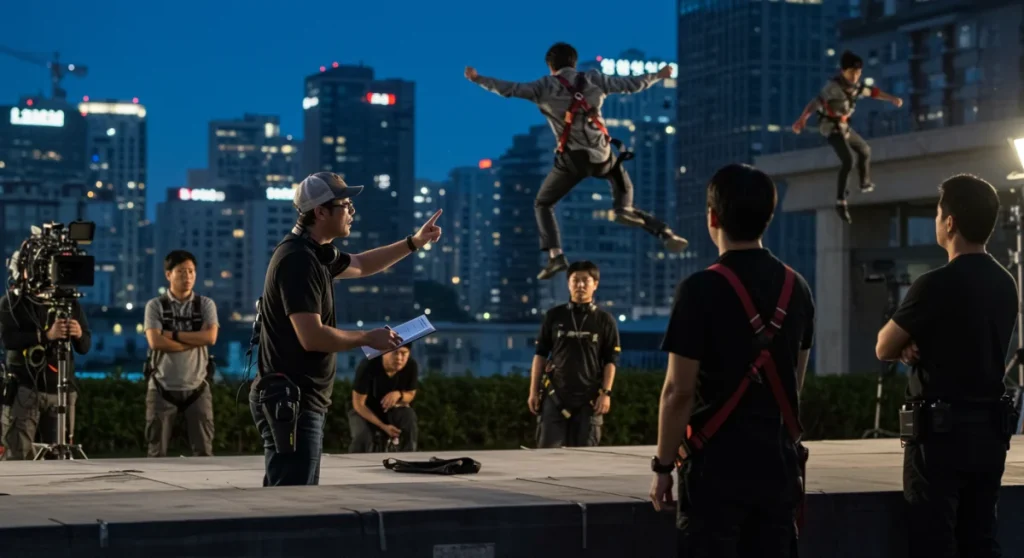
The rise of U.S.-based K-drama stunt coordinators is significantly shaping action sequences today, integrating Western techniques with Korean storytelling to enhance global appeal and deliver unprecedented cinematic thrills.
The global phenomenon of K-dramas has captivated audiences worldwide, not just with compelling narratives and charismatic actors, but also with increasingly sophisticated and breathtaking action sequences. This evolution owes much to the unsung heroes behind the scenes, particularly the growing influence of U.S.-based K-drama stunt coordinators who are bridging the gap between Hollywood’s technical prowess and Korean dramatic artistry. Their expertise is elevating the genre, ensuring that each punch, kick, and explosive moment feels authentic and impactful, leaving viewers on the edge of their seats.
The evolving landscape of K-drama action
K-dramas have long been celebrated for their emotional depth and intricate plotlines, but in recent years, the genre has witnessed a significant upgrade in its action choreography. This shift is not merely about bigger explosions or more elaborate fights; it’s about a nuanced integration of storytelling with physical performance. The demand for more realistic and visually stunning action has prompted production companies to seek out the best talent globally, leading many to U.S.-based professionals.
These coordinators bring a wealth of experience from Hollywood, known for its high safety standards, advanced rigging techniques, and innovative fight choreography. Their involvement ensures that K-drama action sequences are not only thrilling but also adhere to stringent safety protocols, a crucial aspect often overlooked by audiences but vital for the cast and crew. This cross-cultural exchange of ideas and techniques is creating a unique hybrid style that is both distinctly Korean and universally appealing.
Bridging cultural and technical gaps
- Adapting Western stunt methodologies to Korean narrative styles.
- Introducing advanced rigging and wirework techniques for enhanced realism.
- Prioritizing performer safety with international best practices.
- Fostering collaboration between diverse stunt teams.
The result is a dynamic fusion that respects the dramatic beats of K-dramas while injecting them with the visceral excitement typically associated with blockbuster action films. This collaboration is not just about bringing new techniques; it’s about fostering a deeper understanding of cinematic action, where every movement serves the story and elevates the emotional impact. The evolving landscape of K-drama action is a testament to this successful blend of talents and visions.
The impact of Hollywood expertise on K-drama productions
Hollywood has long been the gold standard for action filmmaking, boasting decades of experience in developing complex stunt work, special effects, and safety protocols. When U.S.-based stunt coordinators enter the K-drama scene, they don’t just bring their resumes; they bring an entire philosophy of action design. This includes detailed pre-visualization, intricate fight choreography, and a strong emphasis on character-driven action that enhances the narrative rather than detracting from it.
The influence extends to equipment and training. Many U.S. coordinators are adept with cutting-edge technology, from advanced camera rigs that capture dynamic movement to specialized safety gear that minimizes risk. They also often establish rigorous training regimens for actors and local stunt teams, elevating the overall skill level and ensuring that performances are consistent and believable. This level of professionalism is raising the bar for K-drama productions, making them competitive on a global scale.
Key areas of influence
- Enhanced realism in fight choreography and combat scenes.
- Improved safety standards and risk management on set.
- Integration of advanced cinematic techniques for action sequences.
- Development of local stunt talent through professional training.
The collaboration between U.S. and Korean stunt professionals is a two-way street, fostering mutual learning and innovation. Korean teams offer unique perspectives on dramatic storytelling and cultural nuances, which U.S. coordinators then help translate into physical action. This synergy enriches the final product, allowing K-dramas to deliver action that resonates deeply with diverse audiences, combining spectacle with profound emotional resonance.
Figure 1: John “J.C.” Chien – The trailblazer
John “J.C.” Chien stands as a pivotal figure in the integration of U.S. stunt expertise into K-dramas. With a career spanning decades in Hollywood, Chien brought a wealth of experience from working on major action films to the Korean entertainment industry. His approach emphasizes meticulous planning and a deep understanding of physics, ensuring that each stunt is not only spectacular but also scientifically sound and safe.
Chien’s early work in K-dramas was instrumental in demonstrating how Hollywood-level action could be seamlessly woven into Korean narratives without sacrificing their unique charm. He is known for his innovative use of wirework and practical effects, creating breathtaking sequences that feel grounded in reality. His dedication to training local stunt teams has also had a lasting impact, helping to cultivate a new generation of skilled professionals in Korea.
Signature contributions
- Pioneering advanced wirework techniques in early K-drama action.
- Developing comprehensive safety protocols for complex stunts.
- Mentoring local stunt artists and elevating their skill sets.
- Integrating realistic combat choreography with dramatic storytelling.
Through his trailblazing efforts, Chien opened the door for other U.S. stunt coordinators, proving that the cross-cultural collaboration could yield exceptional results. His legacy is evident in the increased sophistication and ambition of K-drama action sequences today, setting a high standard for quality and innovation in the genre.
Figure 2: Sophia Lee – The innovator of dynamic combat
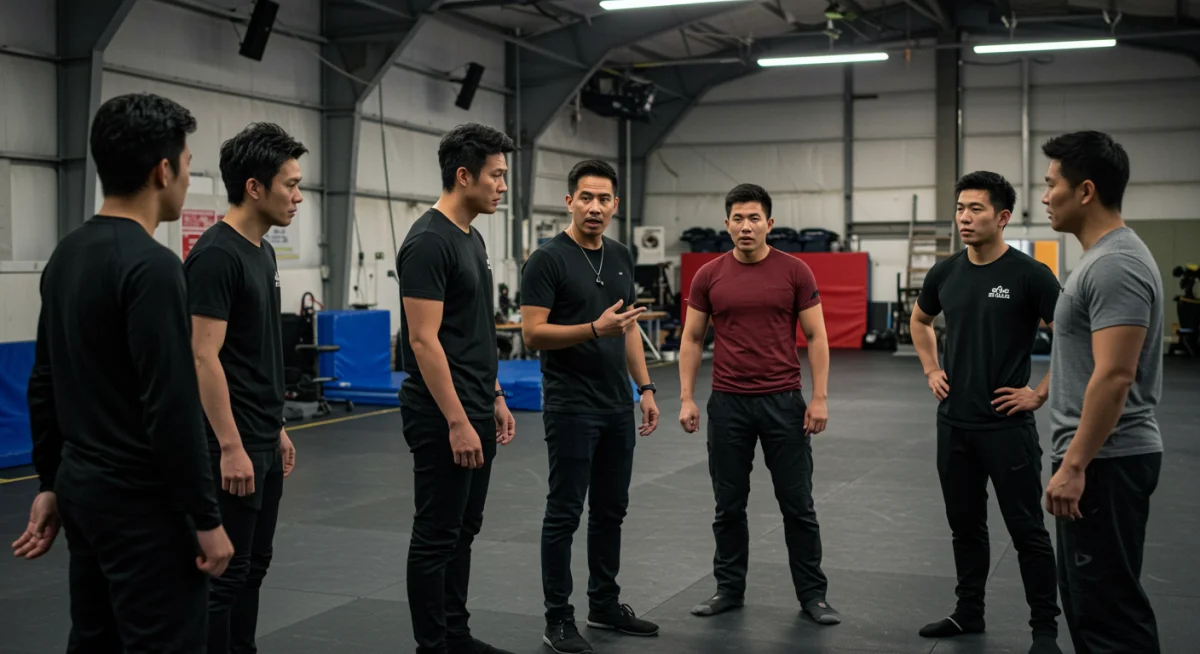
Sophia Lee has carved out a niche as an innovator of dynamic combat choreography within the K-drama landscape. Her background in martial arts and gymnastics, combined with her experience in American action films, gives her a unique perspective on designing fight scenes that are both fluid and impactful. Lee focuses on character-driven action, ensuring that each move reflects the character’s personality and advances the plot.
Her work often features intricate hand-to-hand combat sequences that are fast-paced and visually stunning, utilizing a blend of traditional martial arts and contemporary fighting styles. Lee is also a proponent of utilizing environmental elements in action, turning ordinary settings into dynamic arenas for conflict. This innovative approach adds layers of realism and excitement to her choreographed sequences, making them truly memorable.
Lee’s choreographic hallmarks
- Emphasis on character-specific fighting styles.
- Creative use of the environment in action sequences.
- Seamless integration of martial arts and acrobatic movements.
- Focus on visual storytelling through physical combat.
Sophia Lee’s contributions have significantly elevated the standard of combat choreography in K-dramas, pushing boundaries and inspiring a more nuanced approach to action design. Her ability to blend artistic expression with raw power has made her a highly sought-after talent, influencing a new generation of K-drama action sequences.
Figure 3: Mark Davis – The master of vehicular mayhem
Mark Davis is renowned for his mastery of vehicular stunts, bringing a level of high-octane excitement to K-dramas previously seen only in major Hollywood productions. His expertise lies in designing and executing complex car chases, crashes, and other vehicle-related action sequences that are both thrilling and safe. Davis has a meticulous approach to planning, using advanced simulations and precise timing to achieve spectacular results.
Having worked on numerous high-budget action films in the U.S., Davis understands the intricacies of coordinating multiple vehicles, stunt drivers, and special effects teams. His work in K-dramas has introduced more sophisticated practical effects and minimized reliance on CGI for vehicle stunts, creating a more visceral and authentic viewing experience. He is also a strong advocate for on-set safety, implementing rigorous measures to protect everyone involved.
Davis’s specialized skills
- Designing and executing intricate car chase sequences.
- Expertise in controlled crashes and vehicle rollovers.
- Implementing advanced practical effects for vehicular stunts.
- Ensuring maximum safety for all personnel during high-risk scenes.
Mark Davis’s influence has transformed the scope of action in K-dramas, particularly in genres involving crime, espionage, and thrillers. His ability to deliver thrilling vehicular mayhem with precision and safety has made him an invaluable asset, proving that K-dramas can compete with the best in global action cinema when it comes to automotive spectacle.
Figure 4: Emily Chen – The architect of aerial acrobatics
Emily Chen specializes in aerial acrobatics and sophisticated wirework, bringing a graceful yet powerful dimension to K-drama action. Her background in dance, gymnastics, and aerial performance, combined with extensive stunt coordination experience in the U.S., allows her to choreograph sequences that defy gravity with artistic flair. Chen believes that aerial stunts should not only be visually impressive but also convey emotion and narrative depth.
Her work often involves intricate flying sequences, dynamic leaps, and elaborate combat scenes performed mid-air, requiring precise timing and advanced rigging techniques. Chen is known for her innovative use of harnesses and counterweights, creating the illusion of effortless movement while ensuring the safety of performers. She collaborates closely with directors and cinematographers to capture these moments from the most impactful angles.
Chen’s aerial artistry
- Choreographing complex wirework and flying stunts.
- Integrating dance and acrobatic elements into action.
- Developing innovative rigging solutions for aerial sequences.
- Focusing on the emotional expression through physical movement.
Emily Chen’s architectural approach to aerial acrobatics has added a unique layer of visual storytelling to K-dramas, especially in fantasy and historical genres. Her ability to make the impossible look beautiful and believable has cemented her reputation as a visionary in stunt coordination, pushing the boundaries of what is achievable on screen.
Figure 5: David Kim – The strategist of large-scale battles
David Kim brings extensive experience in coordinating large-scale battle sequences, a skill honed through years of working on epic historical dramas and war films in the United States. His expertise is invaluable for K-dramas that require massive crowd control, intricate combat formations, and the seamless integration of special effects with practical stunts. Kim’s strength lies in his strategic planning and ability to manage hundreds of performers and complex scenarios simultaneously.
He is known for breaking down large-scale action into manageable, safe, and visually compelling segments. Kim meticulously plans every detail, from weapon choreography to crowd reactions, ensuring that each element contributes to the overall chaos and grandeur of a battle. His approach prioritizes both authenticity and safety, making sure that the intensity of the scene never compromises the well-being of the performers.
Kim’s battleground expertise
- Coordinating hundreds of stunt performers in large-scale combat.
- Designing intricate battle formations and strategic movements.
- Integrating special effects seamlessly with practical stunts.
- Implementing robust safety measures for complex, crowded scenes.
David Kim’s strategic vision has been crucial in elevating the spectacle of large-scale action in K-dramas, particularly in historical and fantasy productions. His ability to orchestrate chaos into compelling cinematic moments has made him a vital asset, demonstrating how meticulous planning can transform ambitious visions into stunning realities on screen.
| Key Figure | Specialization & Impact |
|---|---|
| John “J.C.” Chien | Trailblazer in advanced wirework and safety, bridging Hollywood techniques with K-drama narratives. |
| Sophia Lee | Innovator of dynamic, character-driven combat choreography, blending martial arts and environmental elements. |
| Mark Davis | Master of high-octane vehicular stunts, bringing Hollywood-level car chases and practical effects. |
| Emily Chen | Architect of aerial acrobatics and intricate wirework, adding graceful, emotion-driven flying sequences. |
Frequently asked questions about K-drama stunt coordination
U.S.-based stunt coordinators bring specialized skills, advanced safety standards, and innovative techniques from Hollywood, elevating the complexity and realism of K-drama action sequences. Their expertise helps meet the growing global demand for high-quality, impactful action in Korean productions, blending diverse cinematic approaches effectively.
They adapt by understanding the specific dramatic and cultural nuances of K-dramas. Instead of merely replicating Hollywood action, they integrate Western technical prowess with Korean storytelling, ensuring stunts enhance emotional depth and character development, creating a unique hybrid style that resonates with global audiences.
Safety is paramount. U.S.-based coordinators implement rigorous safety protocols, drawing from Hollywood’s extensive experience. This includes detailed pre-visualization, advanced rigging, and comprehensive training, all aimed at minimizing risks for actors and stunt performers while executing complex and dangerous sequences effectively.
They contribute significantly by elevating overall production quality, fostering talent development through training, and facilitating cross-cultural exchange of ideas. Their work often involves collaborating with directors and cinematographers to achieve specific visual aesthetics, enhancing the cinematic impact of action sequences beyond mere physical performance.
Future trends likely include even greater integration of virtual production technologies, more sophisticated CGI combined with practical effects, and continued innovation in hybrid stunt techniques. The influence of U.S.-based coordinators will likely lead to K-dramas pushing boundaries further, delivering increasingly immersive and groundbreaking action experiences globally.
Conclusion
The increasing presence and influence of U.S.-based K-drama stunt coordinators represent a significant turning point for the genre. By blending Hollywood’s technical expertise, rigorous safety standards, and innovative choreography with the unique storytelling sensibilities of Korean dramas, these professionals are not just creating spectacular action sequences; they are redefining what K-dramas can achieve on a global stage. Figures like John “J.C.” Chien, Sophia Lee, Mark Davis, Emily Chen, and David Kim are at the forefront of this exciting evolution, ensuring that K-drama action is not only thrilling but also deeply integrated into the narrative, captivating audiences worldwide and setting new benchmarks for cinematic excellence.